


However, the traditional understanding of a career has changed drastically. Working remotely as an independent freelancer is not an alternative option anymore – it is now a widespread career path for entrepreneurs and businesses worldwide. Indeed, numerous big corporations, rapidly growing startups, and even small companies employ freelancers to grow their business without hiring additional in-house employees.
Although being a total beginner in freelancing may seem intimidating and challenging, transitioning to the freelance economy does not require any degree or huge investment. What you need instead is a marketable skill, a strict routine, and a strategic way of finding clients. Therefore, below you will discover a step-by-step guide for building a thriving freelance career from scratch.
Step 1 – Finding a Marketable Skill
For most newbies who dream of freelancing, the biggest problem lies in the belief that they lack specialized skills. Nevertheless, any type of work that business owners do not have time, willingness, and ability to perform can be turned into a freelancing service.
Consider the areas you are experienced in:
Writing and Editing: Blog articles, copywriting pieces, thesis editing, newsletter writing, etc.
Design & Creative: Logo creation, PowerPoint slides, social media images, video editing, and even photo retouching.
Administrative Support: Data entry, virtual assistance, customer support, scheduling appointments, etc.
Technology & Development: Website testing, minor changes to code in HTML or WordPress, app bug fixes, spreadsheets automation.
Step 2 – Choosing a Platform Strategy
Being a newbie in freelance work, the fastest strategy that will help you get started quickly is the employment of well-established freelance platforms. Not only will they give you easy access to potential clients, but the use of such platforms will also make sure that all transactions are insured by an escrow payment system.
Therefore, depending on your preferences and working style, you can choose one of the following options:
A. Productized Storefront Model (Fiverr)
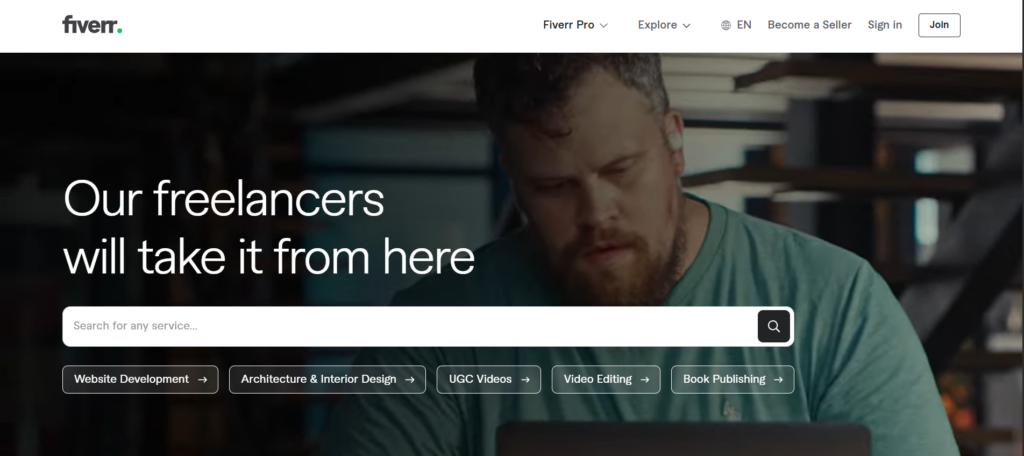
This freelance platform helps you structure your skills into a package, known as a ‘Gig’ (for example, “I will remove the background from 20 product photos for $15”)
What it means: Rather than spending time chasing for clients and creating extensive proposals, you focus on creating the perfect title and description of your gigs so that people could browse your profile just as they would go shopping in a real store.
Official website: https://www.fiverr.com/
B. Open Bidding Model (Upwork, Freelancer.com)
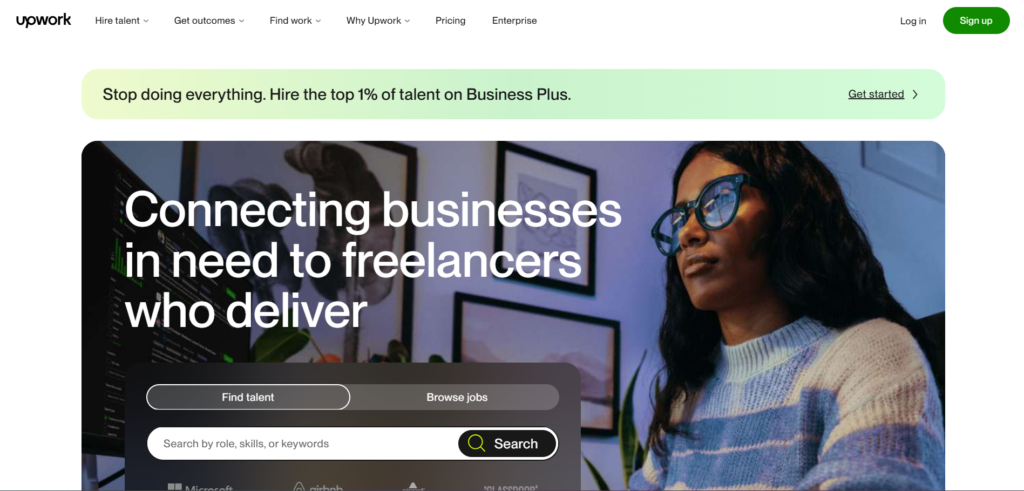
Upwork
Freelancer
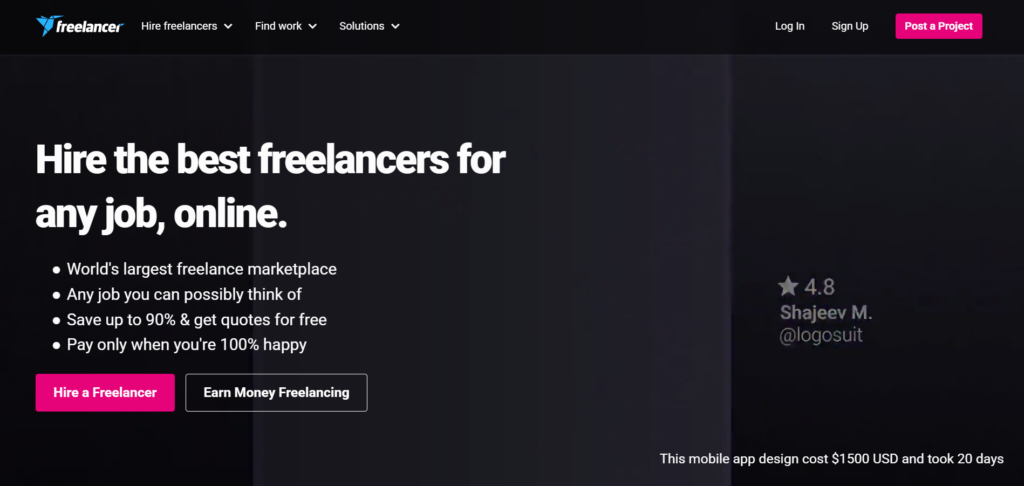
These freelance platforms have an open feed where clients can place their job posts (such as “Need an assistant to manage my real estate calendar”) and then freelancers bid to win this assignment.
What it means: You constantly monitor such websites and submit customized proposals, explaining how you can help the client with their issue through your skills.
Official websites:https://www.upwork.com/ | https://www.freelancer.com/
Step 3 – Building Mock Portfolios
The vicious circle of freelancing is that you need to have previous work experience to get new jobs, while having no previous work makes it impossible to find a first client to start from. Hence, the best thing to do when starting your career is to create “Spec Work” or mock projects.
Imagine yourself a fictional client and build a portfolio:
Write a full 30-day content plan for their social media page if you want to become a social media manager.
Create a beautiful visual design for their website or improve their current layout if you are a web designer.
Redesign a website page, blog post, etc. if there is no project to start from, but you can find some website that needs redesigning.
Explain what you have done: Don’t just provide pictures or text; rather explain the task in 2–3 sentences.
Step 4 – Writing Winning Proposals
When looking for jobs on freelance platforms, you need to stay away from using templates. All clients immediately spot copy-pasted letters and reject proposals without further consideration.
The 2-sentence hook: When opening a proposal, the client only sees the first 2 sentences. Make them count and try not to write a standard “My name is…” introduction. Start right away by addressing your future client’s needs, for example, “After reviewing the attached spreadsheet, I saw that the automated script cannot read your dynamic calculations correctly. This is exactly how we can patch it…”
Keep it short: Corporate clients are extremely busy, so do not spend too much time describing yourself in long letters. Moreover, try to break your points down to the list of bullets and close with a simple call-to-action.
Step 5 – Landing 5-Star Reviews
Once you managed to land your first job and complete it successfully, the most important thing is to secure a 5-star review. All freelance platforms tend to promote profiles with high ratings, which increases your chances to get more jobs.
Under-promise and over-deliver: For example, if you think you can do something in 2 days, promise that you will finish it in 4 days. This way, you will definitely be faster than expected.
Stay professional: Communicate asynchronously when you start doing the job and during the mid-term of the project; contact the client only regarding the finished deliverables.
FAQs
Q: Do I have to pay any taxes if I’m working as a freelancer from home?
A: Indeed, yes. Being an independent contractor, you run your own freelance company. In contrast to traditional employment, your income is not automatically subject to taxation. However, it is highly recommended to save at least 25–30% of each received sum in your personal account, as you will need this amount for paying taxes at the end of the year.
Q: How can I protect myself from scammers?
A: One golden rule: do not communicate outside the platform’s official message system before the contract starts and payments are done through the platform’s escrow system. Whenever your client tries to contact you outside, reporting them should be your priority. Real clients always prefer to pre-fund milestone payments through the platform.
Q: Is it possible to move to a full-time freelancing career from part-time?
A: Certainly! Starting off as a side-hustle freelancer is actually a great decision. Spend 1–2 hours per day, either evenings or weekends, on your freelance portfolio, applications, and completed jobs. Do not quit your full-time job before being sure that your income from freelancing covers your expenses for at least 3 months.
Conclusion
As we see, building a freelance career is a long journey that requires a lot of patience at the beginning. However, once you land your first contract and get a number of positive reviews, everything will change. Therefore, pack your tool stack, package your skills, protect your processes, and launch your freelancing career today!


About Me
Welcome to Freelancer Guides. I share freelancing tips, digital skills, online earning ideas, career guidance, and useful resources to help learners grow and succeed.
Recent Post




Gallery











No Comments